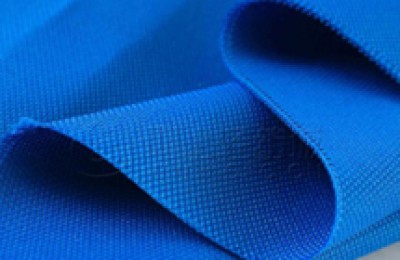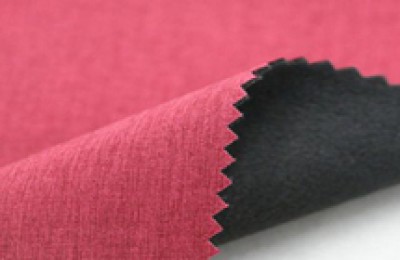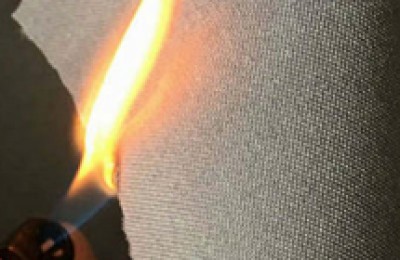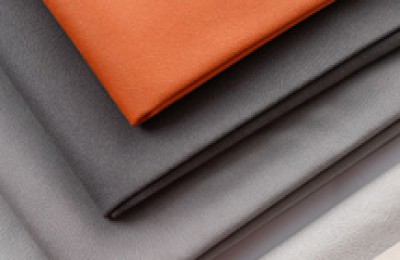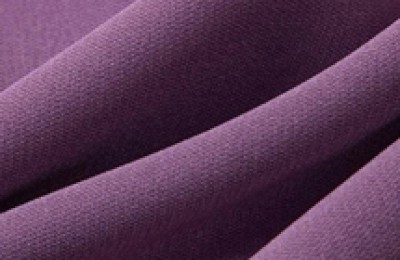

Through people’s continuous improvement of polyester fiber, polyester products have become more and more popular. Polyester is widely used in knitting, home textiles, industrial and other industries, and the demand is very broad.
The process flow of ordinary polyester (low twist or medium twist) fabric:
Prepare cloth → pre-treatment bleaching (whitening) → washing → dehydration → drying → shaping (finishing) → inspection and packaging
Ordinary full polyester ( The technological process of high twist) fabric:
Prepare fabric → Preshrink → Book → Reduction → Pre-treatment bleaching (whitening) → Washing → Dehydration → Drying → Shaping → Inspection
Process description
1. Fabric preparation: select gray fabrics , weighing, seaming.
2. Preshrinking: Preshrinking is required when processing 100% polyester twisted fabric, and the preshrinking process is completed in the dyeing equipment. The preshrinking temperature of strongly twisted fabrics is higher than that of elastic fabrics, which can reach 130°C. Refining agents can be appropriately added during pre-shrinking to remove various impurities on the fabric. However, if the temperature is too high, the refining agent added during pre-shrinking will easily peel off the magazines on the inner wall of the dye vat, causing contamination to the fabric and ultimately affecting the whiteness. In order to improve the impurity removal effect in the pre-shrinking stage, an appropriate amount of liquid caustic soda can be added during pre-shrinking.
3. Predetermination: The temperature of strongly twisted fabrics is slightly higher, generally not exceeding 200°C. The determination of the vehicle speed is not only related to the thickness and moisture content of the fabric, but also related to the length of the setting machine.
4. Weight reduction: The scheduled weight reduction of strongly twisted fabric can be completed in the weight reduction machine or in the weight reduction cylinder. The intermittent rope reduction of the reducing machine facilitates the control of fabric feel and strong damage. When reducing the amount, a reduction accelerator can be added appropriately.
5. Pre-treatment and bleaching: Bleaching and whitening of ordinary polyester fabrics usually takes one bath. Temperature﹤130℃, holding time 40min.
6. Washing: It is best to add an acid wash before the fabric comes out of the vat to ensure the feel of the fabric. Ordinary washing can also be performed.
7. Drying: usually the padding and tenter drying method is used, the temperature is controlled at 160-180℃, and the time is 30-60S. It can also be dried directly.
Precautions when dyeing polyester fabrics:
Strong twist Fabrics require weight reduction processing and bleaching and whitening processing. Ordinary fabrics can increase the temperature during refining and complete the bleaching and whitening processing in one bath. When dyeing polyester fabrics, the temperature is generally controlled at 110-130°C. Generally, at 102-110°C, dye aggregation is easy to occur. If the aggregation is absorbed by the fiber, stains are likely to occur, so the temperature must be raised quickly at this temperature.
Precautions for pre-treatment of polyester fabrics:
1 . Gray fabrics should not be stacked for too long to avoid uneven stress within the fabric and affect the stability of the door width.
2. The temperature is controlled below 200℃ during preforming.
3. When bleaching and whitening, the heat preservation time can also be appropriately extended and the process temperature can be raised. </p