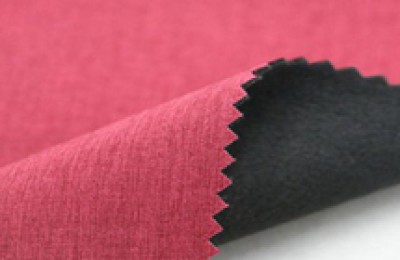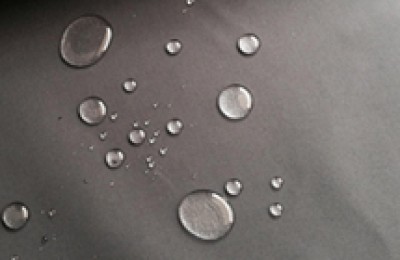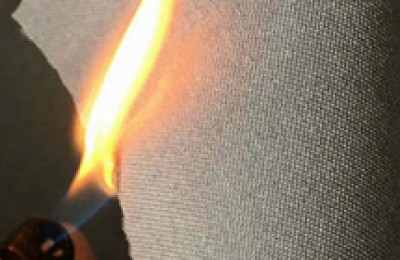

Fabric quality includes the intrinsic quality and appearance quality of the fabric. With the increasing awareness of internationalization and branding of clothing companies, the market demand for defect-free yarn and defect-free cloth has prompted textile companies to have increasingly strict requirements on the length and size of yarn defects in the appearance of cotton fabrics.
To this end, in the production process of cotton yarn, 100,000 meters of yarn defect testing, data analysis and Control has received more and more widespread attention and attention, especially with the development of electronic yarn clearing technology for automatic winding machines. The improvement of splicing quality provides an effective guarantee for the reduction of cotton yarn defects.
01 Method 1 Strengthen equipment maintenance and parameter setting
From the perspective of the root cause, A2 yarn Defects are raw material yarn defects, which appear as short, small, and numerous distributions on the cloth surface. This kind of yarn defect is usually caused by the high shortness rate, low maturity and high defect content of the raw materials.
To reduce small yarn defects in cotton yarn, it is necessary to set strict cotton blending standards for raw materials and constantly correct the N and S values of the yarn clearer parameters in the winding process.
During the spinning process, immature cotton fibers tend to form a large number of hooks and produce many small yarn defects. Therefore, it is necessary to control the quality of raw cotton. When formulating raw cotton quality control standards, we must not only consider the quality requirements of different cotton yarn numbers in terms of quantity control of small yarn defects, but also consider the quality requirements of cotton yarn for weaving and dyeing products.
To blend cotton well, you must not only control the cotton grade, length, and fineness, but also appropriately control the immature fiber content and short fiber content.
Due to the existence of short fibers in cotton, the high-speed operation of spinning equipment will cause a large amount of short fibers to become flying flowers and dust. These flying flowers and dust will adhere to the spinning equipment or yarn channel. on, resulting in many yarn defects in the cotton yarn produced.
Therefore, in order to reduce yarn defects such as flying flowers and slubs, it is necessary to strengthen the standardization of operating cleaning system, equipment maintenance and wiping system, and special parts inspection and inspection, and implement them one by one. , strengthen record inspection to ensure that the machinery in each process does not accumulate flowers, hang flowers, wrap flowers, stick flowers, or damage the yarn structure.
The winding process is the last quality control process in spinning and the first quality control process in weaving. Electronic yarn clearer is an important means to control yarn defects.
In addition to completing the task of removing yarn defects, the yarn defect detector also has a very important point of controlling the operating efficiency of the automatic winding machine. The setting of the yarn clearing process of the electronic yarn clearer should be based on the requirements of the fabric to determine whether it should be relaxed or tightened. For high-end fabrics, the main function of the electronic yarn clearer is to remove some neps N and short slugs S. Relatively speaking, its flaw cleaning load is relatively heavy.
In production practice, yarn clearer parameters N and S should be constantly corrected, and the suitability of the process can be verified by rewinding the package. Through these measures, we can significantly reduce A2 yarn defects.
02 Method 2: Reasonably set up the electric cleaning process to reduce the number of yarn defects and improve yarn quality
With the continuous development of electronic technology, the functions of electronic yarn clearers are becoming more and more powerful. However, blindly pursuing the minimization of yarn defects while ignoring production efficiency will cause excessive shearing.
Intensive shearing will lead to a higher miscutting rate. Although small yarn defects are reduced, harmful large yarn defects are difficult to remove and knots increase; and the winding efficiency is significantly reduced. ,Increased costs. Therefore, reasonable electro-cleaning process parameters must take into account both quality and efficiency.
When setting the electric cleaning process parameters, the company can set the initial electric cleaning process based on the yarn defect inspection results of 100,000 meters of spun yarn, and then set the initial electric cleaning process based on the yarn defect inspection results of 100,000 meters of package yarn. To optimize the electro-cleaning process parameters.
Of course, you can also set the electric cleaning process parameters first, and then do hundreds of yarn defect detection. We divided the 200 spun yarn bobbins into two equal parts, and successively relaxed and tightened the electric clearing process parameters on the same machine and spindle position to rewind the yarn, and at the same time calculated the empty cutting rate and conducted experiments.
If the initially determined process parameters are too high for air cutting and produce many small yarn defects, but after relaxing, more large yarn defects can be cut, it means that the original process parameters are too tight; If the initially determined process parameters are few in air cutting, and there are many large yarn defects and few small yarn defects, and the number of small yarn defects increases significantly after tightening, then the original process can be maintained if it meets the customer’s requirements (the quality requirements are not high), otherwise it should be considered. Power cleared twice.
In short, the setting of electro-cleaning process parameters should be consistent with the inherent quality of the yarn and user requirements. Overdoing is not enough. The focus is on analyzing the types and causes of yarn defects, starting from the process and equipment. Take effective measures in terms of operation, temperature and humidity to reduce the number of yarn defects and improve yarn quality. Use the statistical data of the electronic yarn clearer and combine it with physical objects to guide the quality control of the previous process. It is not advisable to rely too much on electric clearing to improve quality. .
03 Method 3: Strengthen the maintenance of spinning machine condition and reduce spindle belt slippage and twist yarn defects by 60%
In order to reduce mechanical twist yarn defects, we conducted yarn twist tests on spindles, spindle belts, tension discs and roller discs under bad conditions, and selected 5 key control items based on the degree of impact for cause analysis.
The spindle belt is hung with a tension reel or protective hook. The main reason is that the doffing worker hangs the spindle belt off when cleaning the spindle belt tension disk; the second reason is that the tension disk shakes due to lack of oil or the bearing is worn and stops, causing the spindle belt to slide out of the spindle belt disk.
The spindle belt is seriously off track, that is,The belt ran out of the spindle tray
The main reason is that the doffer pulled the spindle belt out when cleaning the spindle tray with a brush. The diameter of the deviation position of the spindle belt is smaller than the diameter of the spindle disc, resulting in strong twisted yarn. On the contrary, it is a weakly twisted yarn.
Pressure failure
The spindle belt tension and pressure arm of the JWF1516 spinning machine is designed with a lever-staged and open hanging weight structure. Compared with the screw-locked weight structure of the old machine, the pressure adjustment operation is simple and the maintenance is convenient. But it increases the chances of the weight falling off and hanging in the wrong gear.
Roller lock failure
The roller of JWF1516 spinning frame The locking sleeves of the plate and the fixed roller are both plastic parts, which are easily deformed, become hard and brittle due to aging, and affect the locking elasticity, which increases the chance of the nut loosening. If the nut completely loosens, the roller locking will fail.
The spindle sinks. Damage to the spindle support bearing or wear of the spindle tip causes the spindle to sink, causing the spindle to run unstable and swing, affecting the spindle speed, thereby causing a reduction in twist.
Based on the cause analysis, we have taken the following measures:
Strengthen on-the-job training for new workers, strengthen their sense of responsibility, and correctly implement operating methods;
Strengthen maintenance to ensure mechanical condition;
Strengthen detection and tracking;
Appropriately expand the scope and quantity of the twist test;
Twist test the low-strength yarn detected in the test and the alarm bobbin rejected by the automatic winding machine, and trace the twist yarn defects. Eliminate bad mechanical conditions;
Strengthen the work quality inspection of night shift maintenance workers and doffing workers;
Discover bad mechanical conditions Record and correct.
The above measures have achieved obvious results. According to statistics, the monthly average number of mechanical defective items decreased by 61.11%, the correction rate increased from the original 77.81% to 100%, and twist yarn defects were significantly reduced. </p