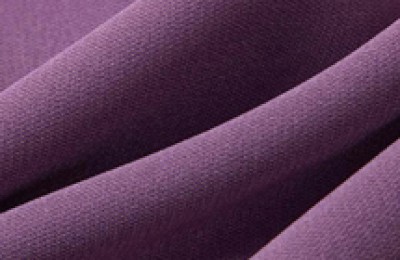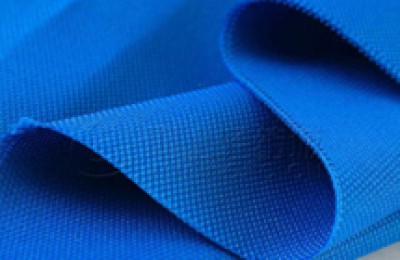

The color of the dyed fabric must be produced according to the color number or sample specified by the customer. However, in actual production, sometimes the color of the dyed finished product does not match the specified standard color and exceeds the allowable color difference standard.
First color sample confirmation
1. Color sample self-evaluation
Use gray card to match colors. The requirement between the original sample and the sample is 4.5. When using a tester to match colors, generally △E<1. Considering the system error, the internal control standard is △E<0.6, and we strive to get the sample right the first time. If the requirements are high, hue △H and chroma △C should also be taken into consideration.
Be fully aware of the heat and light sensitivity of dyes. There are fewer photosensitive dyes. For example, try not to use Cibaclon Yellow CR-01, especially Cibaclon Yellow C-2R. Most dyes are more or less heat-sensitive. Shilin dyes are more prominent. Cold, heat, dryness, and humidity all have an impact on the color and light. When making color comparisons with such dyes, you must consider the trend of the dye’s color and light after stabilization, and reverse the direction if desired. A little off. For example, after the color of most dyes is stabilized, it tends to be slightly darker in red. When the sample is slightly colder after printing, it should be slightly brighter in green, so that when the color is stable, it will be exactly the same as the original color. Using dyes with severe photosensitivity and heat sensitivity as the main color proofing may cause color printing on mass-produced color cloths, which may even be irreversible in serious cases, such as olive green R, yellow C-2R and other dyes. Therefore, such dyes cannot be used.
Whether the prototype meets the customer’s requirements, you must be aware of regular customer proofing, and it is easy to make accurate samples based on customer habits. Different regions have different color preferences.
Generally, customers require at least 3 prototypes, namely samples A, B, and C. Sometimes, 12 samples are also required. Consider aspects such as depth, lightness, brightness, and hue to improve the first-time accuracy rate.
2. Approval of the sample
When the customer’s opinion is different from the actual situation, possible light source problems should be taken into consideration and the Communicate with customers.
When the customer reports that most of the samples in a color palette are too dark, it should be considered that the customer may be comparing the samples in two layers, especially for thin and transparent fabrics, the laminated samples will become darker. Some large companies require 4 layers of matching colors for thin and transparent woven fabrics and knitted fabrics. The norm is a single layer of color matching.
When the “jumping light” is severe, consider replacing the dye to improve the “jumping light”. To understand the “metameric” properties of dyes, make full use of colorimeter to screen dyes. When the dyes applicable to our factory cannot meet the customer’s “light jumping” requirements or the “light jumping” is at △E<0.5, we should communicate with the customer. Once the factory's sample is confirmed and the confirmation sample is used as the reference sample, there will be no "light jumping" problem. Never choose a dyeing formula that is unstable in mass production just to meet customer requirements.
When color matching small samples for direct production, you should try to color match under various light sources, such as D65 natural light and fluorescent lamps. There should be no serious “light jump”. If it is serious, please confirm it with the customer. reproduction.
3. Confirmation of production of large sample (head cylinder sample)
The color and light requirements of large sample production should be strictly in accordance with the customer The approval opinion is to deviate from the original sample to the confirmed sample. It is best to persuade the customer to deviate from the original sample based on the confirmed sample. Because the fabric specifications of the confirmed sample are consistent with the large sample, it is easy to see the sample, the dye used is consistent, and there is no “jumping light” phenomenon. Generally, the color light is between the two, the gray card reaches level 4 or above, △E<1 (the internal control standard is generally △E<0.8), and customers will recognize it.
The batch difference is controlled above gray card level 4, the left, center and right color difference is controlled above level 4-5, and the batch difference △E<1 (within internal control 0.8). When choosing dyes, try to use dyes that are consistent with the sample prescription. Adjust the color light, and the newly added dye may cause a "light jump" phenomenon. When there is an obvious "light jump" between the large sample and the confirmation sample, there will be a risk of rejection of the large product, which will bring economic losses and reduced credibility to the enterprise. For example, when commonly used dyes with opposite spectrums, such as emerald blue, Shilin RB yuan, B green, T green, R red, etc., are used as added dyes, they should be handled with caution and check whether there is serious "light jumping" under each light source. If there is, it cannot be added.
When repeating and replenishing orders, the confirmation sample of the head cylinder is generally used as the basis to deviate from the original sample and the confirmation sample to keep the color and light of the entire batch consistent. However, sometimes when the customer insists on using the original sample or the confirmation sample as the basis, The direction of color light must consider the color light of large goods.
Post-finishing has an impact on the color light, and the color changes with different color lights. Therefore, after dyeing and setting out, the samples in the imitation finishing process need to adjust the color light and then dye them to meet customer requirements.
Main phenomena
1. Color fastness to light
When making samples in the laboratory, there is no light For color plates with color fastness requirements, dyes with good light fastness must be selected before making samples, including auxiliary colors, which must also meet the customer’s color fastness requirements. If there is a dye with poor light fastness in a formula, the light fastness of this color number will be reduced. In addition, dye compatibility should also be considered.
The light fastness on the dye color card refers to the ISO standard, and the test result is an 8-level system; the American AATCC standard is a 5-level system, which is very different. The light fastness series on the dye color card refers to the series when the standard concentration is I:1. Therefore, when dyeing light colors with reactive dyes, it depends on the corresponding concentration series on the dye color card, such as 1/6, 1/12 , 1/25 and other indicators.
2. Metamerism
Light jumping is one of the most common problems in proofing. In actual operation, light color change and metamerism will be encountered.
Use the light box to check the “jumping light” situation, and make a preliminary selection from the accumulated experience prescriptions.�� Summarize the rules and experiences between color matching samples and actual production of large samples, and strive to ensure that dyeing and loading are successful the first time. In order to ensure the rationality of the large-scale production process, the following points must be achieved: a) The tissue specifications of large and small sample fabrics should be the same, and the process conditions of the semi-finished products before dyeing should be consistent. It is better to use the same batch of semi-finished products. b) During pad dyeing, the padding car for making small samples should control a certain pressure. The pressure of the large padding car and the small padding car should be relatively fixed and should not be changed arbitrarily, so that the large and small samples can be easily consistent. The liquor ratio should be kept consistent during dip dyeing. c) The title, color name, suffix and batch number of the dye used when making small samples must be the same as those used in large-scale production, as well as the additives used. The conditions for dyeing small samples should be consistent with those of large samples. d) When color matching, the main color dye should be relatively fixed, and the dye should be used to adjust the color and light for proofing, so as to facilitate the consistency of color and light for large and small samples. e) After the small sample is tested, the influence of the dye’s affinity and adhesion to the fiber on the color difference between the small sample and the large sample must also be considered. Since the pad dyeing of the sample is discontinuous and the residual dye liquor is not reused, the impact on the affinity is minimal. The pad dyeing of large samples is continuous, and the pad dyeing liquid and pad residual liquid are continuously reused. If the affinity of the dye to the fiber is relatively large, such as indicol, vat dye leuco body, direct, reactive, and nanof If the dyes are properly equalized, the dye concentration of the pad bath dye solution taken away from the fabric during pad dyeing will be greater than the dye concentration of the remaining dye solution in the pad bath. If the replenishing solution is insufficient, the concentration of the pad bath dye solution will become lighter as the fabric is pad-dyed. The concentration of the dye taken away from the dye liquor will also gradually decrease until the reduction in the concentration of the padding solution reaches a balance with the concentration of the replenishing solution. However, this has caused a large number of differences in the color of the fabric.
So in actual production, it is necessary to calculate the difference in the amount of each dye in the large sample and small sample prescription of the machine based on the actual conditions of each machine, so as to calculate the conditions of this machine and this process The percentage difference in the amount of dye used per unit for large sample production. The small sample prescription plus (or minus) the difference percentage of the dye is the large sample prescription. In this way, the dye concentration of the pad bath dye solution can be kept in a balanced state from the beginning to the end, and the color difference between the color matching sample and the large sample can be basically consistent.
2. Dyes should be screened
Those dyes that are prone to discoloration during the dyeing process are generally not used. . If it must be used, corresponding measures must be taken after understanding and mastering the properties of the dye. For example, when soluble vat dyes are used to dye polyester-cotton blended fabrics, the discoloration of such dyes at high temperatures must be considered. Some acid dyes will change color at a certain temperature, such as weak acid black GR, which will change color when the temperature is higher than 96°C. All fabrics that require ironing fastness must go through a high-temperature heat drawing process after dyeing. When color matching, consider using dyes that do not change color at high temperatures. Otherwise, the dye will change color and the color will not match the standard sample.
3. Use daylight-like color discrimination standard light source
to ensure the color matching of dyeing production for small samples, large-scale production and dyeing The entire process, including finished product inspection, is conducted under a unified daylight-like light source to greatly reduce the difficulties in color identification caused by different light sources and ensure that the color of the dyed products conforms to the standard sample. Generally, it is ideal to use a standard light source box, and computer color measuring instruments can be used if conditions permit.
4. Arrange the dyeing production plan rationally
When dyeing small batches and multi-color positions, in order to reduce The parking time of the car and cleaning and the shortcomings of frequent wiping of the car that easily cause the cloth to wrinkle, to achieve the purpose of improving production efficiency and avoiding cross-color stains that cause non-compliance with the standard sample, the color positions that need to be produced in the near future should be divided into light and medium colors There are two categories: dark and dark. Each category arranges the production schedule according to the color spectrum from light to dark. The transition from red to yellow must be from orange, from yellow to blue must be from green; from blue to red must be the transition from green lotus. If there is no transition color, the car must be wiped or the dye vat must be cleaned, and the cleaning work must be done. If dip dyeing uses intermittent equipment, sometimes different color positions can be fixed relatively to the machine to prevent color difference.
5. Strengthen the management of batch numbers of dyes and auxiliaries
Dyes of the same color and from different origins should be stacked separately; Dyes of different colors, manufacturers from the same origin, and different batch numbers should also be stacked separately. It is best to use the same batch of dyes when dyeing the same batch of cloth. In principle, do not use dyes with different batch numbers to avoid color differences. The management of auxiliaries should also adopt the same management methods as dyes.
6. Strict process discipline
Seriously carry out the three-level inspection of the process on the vehicle (self-inspection of the stopper, section workshop and factory spot checks). Master the dyeing process conditions and ensure that the dyeing process is carried out according to the process. It is necessary to carefully implement the system of sample checking and pasting for each truck by fabric workers, so as to facilitate inspection and verification, solve problems in a timely manner, and ensure that the color of dyed products conforms to the standard sample. </p