
The definition of strongly twisted yarn
In order to make the yarn have certain physical and mechanical properties such as strength, elasticity, elongation, gloss, and feel, it must be twisted Changing the cotton yarn and twisting the yarn through the fiber structure actually uses the relative angular displacement between the cross-sections of the cotton yarn to tilt the original straight and parallel fibers and the yarn axis to change the yarn structure. The thick strips are twisted by The width gradually shrinks, and the two sides are gradually folded and rolled into the center of the yarn line, forming a twisted triangle. In the twisted triangle, the width and cross-section of the sliver change, from a flat ribbon to a cylindrical yarn.
(1) Definition of twist
A twist is defined as a 360-degree rotation of the yarn around its axis.
(2) Definition of twist
The number of twists of the yarn within the specified length before untwisting, usually per inch It is expressed as the number of twists per inch (T.P.I) or the number of twists per meter (T.P.M).
(3) Definition of twist coefficient
It is a measure of the degree of twist of yarn, in terms of twists per unit length. T.M: Calculated by multiplying the number by the square root of the yarn density. T.M=T.P.I/square root of yarn count T.P.I=T.Mx square root of yarn count
(4) Definition of twist direction
When When the yarn is in a vertical position, the units that make up the yarn rotate around the axis of the yarn to form the inclined direction of the spiral.
(5) S twist definition
The tilt direction of the fiber in the yarn is consistent with the middle of the letter S. It is the right-hand direction or Twisted yarn in clockwise direction.
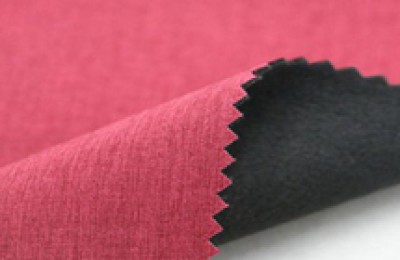
Strongly twisted yarn is mainly used in woven weft yarns, which can produce a unique style of wrinkles on the cloth. Due to the above unique functions, highly twisted yarn as a special yarn has always occupied a place in the yarn market. Strongly twisted yarn can be produced without improving equipment or adding accessories, and the product has high technical content and added value. However, the production of strongly twisted yarn is difficult and the product quality is difficult to control. Production companies must have certain technical capabilities and management experience.
Strongly twisted yarn is a very common fabric that is made into a variety of clothing and used for other purposes in daily life. However, not many people know the characteristics of this fabric. In order to help people understand it better, here is a brief introduction to this issue. I hope it can be helpful to those in need.
Strongly twisted yarn has good dimensional stability and small washing shrinkage. Simply put, clothing or other textiles made of this fabric do not need to worry about shrinkage after cleaning.
Advantages of strong twisted yarn
Strongly twisted yarn has good luster, is very beautiful, and feels very smooth and comfortable. It’s great for making underwear and won’t harm your skin.
In addition, strongly twisted yarn has a unique silk-like feel, and is elegant and vertical. In addition to this feature, Tencel bamboo cotton fabric also has good air permeability and moisture resistance. When textiles made from it are worn in summer, people do not need to worry about its breathability and moisture resistance.
The comprehensive performance of strongly twisted yarn fully meets the requirements of modern people, and it contains a large amount of cotton and uses plant fibers, so it does not cause any harm to the human body. It has strong plasticity, so it can make a variety of clothes. It is also very comfortable to wear, has a soft hand feel, and a very strong drape. It has no smell after burning, so it is a healthy and green textile. .
The commonly used twist coefficient is higher for woven warp yarns, while knitting is generally lower, about 3.5 -3.6. Due to different uses of yarn, there are different twist coefficient yarn products. According to Japanese textile calculation data, they are divided into: ordinary twist = 4.0 (twist coefficient), loose twist = 3.4 (twist coefficient), special loose twist = 1.32- 2.8 (twist coefficient), strong twist=5.0-5.4 (twist coefficient), special strong twist=5.0-6.5 (twist coefficient). High-twist yarn generally needs to be steamed before it can be woven, and sometimes it is necessary to install a twist remover before it can be woven. </p