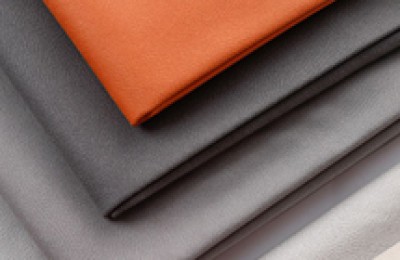

Spandex elastic knitted fabrics undergo large tensile deformation due to the tension during the weaving process. Although they have good resilience, they still cannot return to their natural state. The width and thickness of the fabric are easily unstable, which will have a greater impact on dyeing and finishing. The purpose of relaxation is to fully preshrink the fabric and eliminate the residual stress inside the fabric. In the dyeing and finishing processing of cotton knitted fabrics, the tension should be reduced as much as possible to keep the fabric in a relaxed state and avoid elongation of the fabric fibers. This article briefly discusses the matters that need attention during dyeing and finishing processing, common defects, analysis and prevention of dyeing and finishing wrinkles.
Dyeing and finishing production precautions
1. Selection and inspection of gray fabrics
∇ First check the width and warp and weft density of the incoming blank, and at the same time test the shrinkage elasticity of the gray cloth (take a whole piece of gray cloth, treat it with boiling water for 30rain, test the elastic shrinkage after relaxation and drying, generally (around 30%) for weft elastic fabrics, the width of the gray fabric should be adjusted accordingly according to the width of the finished product and the elastic elongation in the weft direction.
∇ When accepting a production order, you must first understand the customer’s quality requirements, especially those related to elasticity, shrinkage, width and length. If the incoming blank is processed, it is necessary to understand the structural specifications, sizing slurry, warp and weft elastic elongation and shrinkage of the incoming blank, and detect the elastic expansion and contraction of the incoming blank; if the gap between the blank width and the finished product width is not greater than 20%, and If the elasticity of the gray fabric is above 30%, the weft elastic elongation and shrinkage effect of the finished product will be better.
∇ Due to the different compactness of the fabric structure, the uneven stress on the left and right during weaving, and the incompatibility between the edge structure and the main structure of the fabric, the fabric is easily prone to cracking during dyeing and finishing. Curling will occur, so the edge weave of 2/1 and 3/1 twill satin fabrics must be dense, and the longer the floating point, the wider and denser the edge weave is required.
2. Narrowing
Dyeing and finishing of spandex elastic fabrics, especially weft elastic fabrics , first of all, the tension exerted on the weft yarn during weaving must be eliminated in order to restore its due elasticity. Therefore, the shrinking process should be arranged at the beginning of pre-processing. This process can be arranged before singeing, with hot water pine pile washing or combined with desizing (the more complete the desizing, the more complete the shrinkage), and a loose open-width hot washing machine or jigger dyeing machine can be used. In order to prevent wrinkles and skirt curling caused by excessive shrinkage during high-temperature water washing, the step-by-step heating method (60, 70, 80, 90℃) should be used to gradually shrink the fabric.
3. Singeing
Before singeing, the seam should be straight and the width should be The differences should be kept to a minimum within the seam ends, and both ends of the fabric should be hemmed to reduce hemming, hemming, and wrinkling in the post-processing process. Spandex fabric is not resistant to high temperatures. During singeing, the process conditions of high speed and low flame temperature are generally used, and two forward and two reverse directions are used. It is important to note that the temperature of the fabric surface cannot be too high, otherwise the elasticity will be affected. It is required that the singeing is uniform, the cloth surface is clean, and there are no burn marks or wrinkles. After singeing, the next process must be entered as soon as possible, and long-term stacking is strictly prohibited.
4. Desizing
The key to desizing effect is sufficient water washing and sufficient water volume . The method of gradually increasing the temperature step by step and reversing the flow step by step can be used to gradually shrink the fabric, and on the other hand, the slurry and impurities that have been swollen, oxidized and decomposed on the fabric can be quickly removed.
5. Pre-treatment and deboiling process
The spandex yarn of spandex weft elastic fabric cannot be exposed to moisture and heat It is not suitable for rope-like processing if it is used for a long time under the condition; weft elastic fabrics (poplin yarn card, Zhigong twill, etc.) and warp and weft double elastic fabrics are easy to produce curling wrinkles during dyeing and finishing, and are not resistant to concentrated alkali and High temperature, wrinkles, curling and other defects are also prone to occur during the stacking and steaming process. Therefore, the ideal process is to use cold rolling batch pre-treatment process conditions, and adopt low alkali concentration and normal temperature process conditions.
6. Pre-shaping and mercerizing process
Pre-shaping and mercerizing are the methods to stabilize the form of spandex elastic fabric key processes. The order of pre-shaping and mercerizing processes should be determined according to the actual situation. If the width of the semi-finished product is lower than the width of the finished product, it should be shaped first and then mercerized. When the width of the semi-finished product is higher than the width of the finished product, it should be mercerized first and then set.
7. Mercerization
For mercerization of cotton and spandex elastic fabrics, straight roller cloth should be used Mercerizing machine. Spandex yarn does not need to be mercerized, but the outer cotton fiber and warp yarn (cotton) need to be mercerized. Mercerizing not only stabilizes the weft dimension of the fabric, increases the dye uptake rate, and ensures the warp shrinkage, but also regulates elastic expansion and shrinkage. The temperature of the alkali removal box should not be too high to avoid wrinkles, and is preferably 85 to 90°C. Since mercerization has no effect on spandex yarn, the main factor affecting the width is the shrinkage of spandex yarn. Therefore, through mercerization, the cotton/ammonia weft elastic fabric must obtain higher elasticity without shrinking too much.
8. Shaping (pre-shaping)
Because the spandex elastic fabric’s gray fabric is unloaded from the machine The shrinkage rate in the width direction is as high as 40% to 50%, turning the gray fabric into a highly elastic narrow-width fabric. It needs to be controlled by the shaping process to balance the specified width and shrinkage rate of the fabric. In the shaping process, if the temperature is too high and the time is too long, the strength will be affected and it will easily turn yellow; if the temperature is too low and the time is insufficient, the effect will not be achieved. The width of the dropped fabric during setting directly affects the width of the finished product. The elasticity and retraction rate of the finished product can be predicted from the weft shrinkage rate after setting.
9. Dyeing
When dyeing cotton/ammonia elastic fabric, due toThe color fastness is low and the dye fastness is poor.
7. During the processing of cotton/polyester-span interlaced twill fabric, defects such as weft bias, wrinkles, and curling are prone to occur, and wrinkles are easy to occur during mercerization.
8. During the processing of nylon/cotton elastic weft fabrics, the edges of the fabric are severely curled, and the width is different. The elastic dimensional stability of the finished product is difficult to control; nylon is prone to folding. And affect the overall style of the product.
Causes and prevention of wrinkles in dyeing and finishing
Wrinkles are creases or chicken paw prints, which have always been It is a long-standing and difficult problem that is difficult to solve in the dyeing and finishing of chemical fiber or cotton knitted fabrics, especially elastic knitted fabrics containing spandex. In view of the high elasticity and ductility of spandex itself, it is easier to produce or form new wrinkles during processing. , in severe cases, it is difficult to meet the requirements even after repairs, which will have a certain impact and loss on the product quality and efficiency of the factory.
Preventive measures
1. Strengthen pre-treatment equipment and operations: Whether ammonia-containing elastic fabrics are refined in open width or rope shape, the synchronization between the equipment guide rollers must be strengthened or improved to prevent the fabric surface from being pulled and squeezed. Finally, room temperature water washing should be used to prevent overheating and excessive piles of cloth. High or too long will cause wrinkles.
2. Strictly control the pre-setting process: pre-setting can prevent curling, wrinkling and stabilize the door width. A slightly higher shape can be used without affecting the elasticity and feel of the spandex. Temperature setting, such as polyester ammonia type can be controlled at 190-195℃, nylon ammonia type 185-190℃, cotton ammonia type 180-185℃, the vehicle speed is generally 15-20m. At the same time, keep the fabric surface flat to prevent shrinkage and wrinkles.
3. Adjust the nozzle pressure and lifting roller speed during dyeing: coordinate the two according to the weight of the fabric to prevent wrapping, pressing cylinders, and cloth clogging. If necessary, increase the liquor ratio appropriately. Reduce the amount of the tank and add anti-wrinkle agent in the bath or increase the cloth speed, etc.
4. Control the heating and cooling speed: Strictly operate according to the computer program settings, strengthen process discipline, control the temperature not to exceed 1-1.5℃/min, and prevent excessive speed from causing fiber aggregation and shrinkage to cause a large number of wrinkles.
5. Doing a good job in post-shaping can effectively reduce the dropping temperature, and appropriately increasing the setting temperature can help eliminate false wrinkles and slight wrinkles in the previous process. Generally, depending on the type, the controlled temperature of chemical fibers can be 10-20°C lower than the predetermined temperature, and that of cotton can be lowered by 20-30°C. At the same time, it is best to blow cold air and cool down the cooling roller at the cloth outlet to ensure that the cloth surface is below 50°C, otherwise the temperature will be lower than the predetermined temperature. Heat pressing can create new wrinkles.
6. In addition, if the unwinding loose cloth in the front line is left for too long, the spandex will shrink and cause edge wrinkles. It must be booked in time to avoid it. Including dehydration after dyeing, it must not be too dry or too long. Remove to 70% and leave it for no more than 2-3 hours. </p