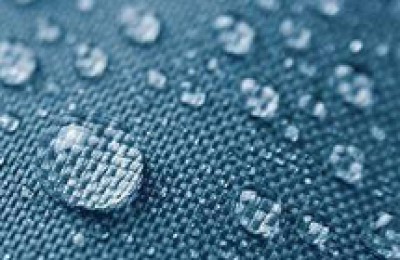

“Environmental protection issues in the textile and apparel industry involve all aspects of the supply chain. If the leading companies in the supply chain can take the initiative to take responsibility, use their advantageous position, and actively coordinate the behavior of upstream and downstream partners, it will help promote the entire supply chain. The green transformation of the chain.”
The textile and clothing industry is closely related to each of our lives, but many people may not You must know that the textile and clothing industry is the second most polluting industry in the world after the oil industry.
The main problem is waste water. It takes about 2,700 liters of water to produce a cotton shirt and about 7,500 liters of water to produce a pair of jeans, while a person’s annual water consumption is only about 1,000 liters. The amount of wastewater produced by the textile and clothing industry accounts for about 20% of global wastewater every year. The key reason why so much water is consumed is cotton – as the main raw material for clothing production, cotton is a very water-intensive crop.
The production of clothing not only consumes a large amount of water resources, but also directly causes water pollution in the textile, printing and dyeing processes. The textile industry uses and discharges a large number of potentially harmful chemicals during the production process. Many of these chemicals will flow out with wastewater, thereby contaminating surface water and groundwater. In addition, greenhouse gas emissions from the textile and apparel industry have exceeded the total emissions from international flights and shipping.
The disposal of used clothes due to overconsumption is also part of the environmental problem. According to data from the China Circular Economy Association, approximately 26 million tons of used clothes are thrown into trash cans in my country every year, and this number is expected to increase to 50 million tons by 2030. At present, used clothes are still mainly disposed of by landfill or incineration, both of which will cause serious environmental pollution.
Environmental problems are so serious. For textile companies, the primary issue in ESG (environmental, social, governance) management is to properly handle environmental issues. The dual pressures of policy and public opinion have made the problem more urgent.
Transformation and change under heavy pressure
National “Thirteenth The Five-Year Plan has clearly stated that by 2020, the energy consumption per unit of industrial added value of enterprises above designated size in the textile industry will be reduced by 18%, the carbon dioxide emission intensity will be reduced by 22%, the water consumption will be reduced by 23%, and the total amount of reused textile fibers will reach 1,200 Thousands of tons. The new environmental protection law that was officially implemented in 2015 also stipulates that the direct emission of chemical oxygen demand (COD) from textile enterprises must be controlled at 80 mg per liter. This is since the COD direct emission standard was raised to 100 mg per liter in 2013. The textile and apparel industry The emission threshold has been raised again.
Textile and apparel companies are often criticized by environmental groups and environmentalist consumers, and even some well-known global brands are not immune. Under various pressures, the textile and apparel industry has attached great importance to environmental protection issues in recent years and has taken various measures to reduce the impact of production and operation activities on the environment.
Environmental protection issues in the textile and apparel industry involve all aspects of the supply chain and require coordination among multiple stakeholders such as raw material suppliers, designers, manufacturers, retailers, and consumers. Actions, in particular, must focus on both ends. In the upstream link of the supply chain, that is, raw material companies must actively carry out technological innovation and develop environmentally friendly raw materials; while in the downstream, that is, the market side, consumers must be educated to change their consumption concepts and cultivate more sustainable Continuous consumption behavior. In this process, the role of supply chain leading enterprises is very important. If supply chain leading enterprises can take the initiative to assume responsibilities, use their advantageous position, and actively coordinate the behavior of upstream and downstream partners, it will be conducive to promoting the green transformation of the entire supply chain.
Take the world-renowned fast fashion brand H&M as an example. One of the methods adopted by the company is to use “better cotton” in clothing raw materials. This cotton is grown without the use of highly toxic pesticides and water resources are strictly managed. H&M’s 2019 sustainability report shows that up to 97% of the cotton used by the company is recycled or other sustainable sources, and the company will no longer purchase traditional cotton from 2020. Of all the materials used by the company, 57% are recycled or other sustainable sources; by 2030, H&M will achieve the goal of using 100% recycled or other sustainable sources.
In 2013, H&M launched a global “used clothes recycling program” in some stores, promising to change the way of producing, using and disposing of clothes, reducing waste and realizing a closed-loop fashion production cycle. . In 2019, H&M cooperated with Alibaba’s idle trading platform Xianyu to launch a free door-to-door service for recycling used clothes.
Supplier Responsibility Management
China is a major country in the textile and apparel industry. In recent years, we have also faced serious environmental pollution problems. Therefore, there is an urgent need for leading supply chain companies to take action and assume the responsibility of promoting the green transformation of the industry’s supply chain.
On August 19, 2020, ANTA Group released the company’s first CSR report (it had previously released ESG reports for 5 consecutive years), and cooperated with the world’s largest non-governmental environmental organization The World Wildlife Fund (WWF) signed a contract and became the first global strategic partner of WWF in China’s sporting goods and textile industry.
According to the agreement, Anta will rely on WWF’s global network resources to launch a series of environmental improvement projects, both��Announced goals to be achieved in the next three years, such as reducing the energy consumption of industrial added value by 30% and reducing the water consumption of industrial added value by 22.5%. In particular, both parties will participate in and continue to improve the supply of at least 3,000 textile enterprises above designated size. water, energy use, waste emissions and supply chain management of businesses.
In recent years, ANTA Group has tried to promote environmentally friendly products through technological innovation, research and development. At present, a total of 16 million pieces of clothing made of environmentally friendly fiber fabrics, a total of 4 million pieces of clothing made of fluorine-free waterproof fabrics, and a total of 2.93 million pieces of clothing made of organic cotton fabrics have been launched. Anta Group is also the first Chinese sporting goods company to join the Swiss Better Cotton Development Association (BCI) and plans to achieve a 50% sustainable cotton procurement target in 2024.
All of these are indispensable without cooperation with suppliers. According to the information disclosed in Anta Group’s 2019 CSR report, Anta selects better suppliers with high standards, formulates a strict supplier access mechanism, and continuously adjusts and improves the audit requirements and audit criteria for suppliers to provide customers with quality products from the source. The consumer is responsible. The company comprehensively evaluates suppliers from four aspects: supplier sourcing, supplier access information evaluation, sample trial testing, and on-site evaluation. Only suppliers with “passed” access evaluation results can enter the cooperation development confirmation process.
In 2019, Anta cooperated with more than 649 suppliers in China and more than 20 suppliers overseas. Among them, the number of suppliers that have obtained ISO9000 quality management system certification and ISO14000 environmental management series standards has increased by more than 70% compared with 2018. In addition, ISO26000 social responsibility guidelines are introduced into the daily operations of specific suppliers to improve their understanding and practice of energy management, material recycling and social responsibility. At the same time, clothing suppliers are encouraged to obtain Bluesign® certification to ensure that the production process of raw materials complies with ecological, environmental, health and safety standards.
Consumer influence
The green transformation of the textile industry involves Another key group is consumers. Without the recognition of consumers, there is no hope of successful transformation.
From the consumption preferences of the whole society, green and environmental protection are becoming an important consumption choice. The “2019 China Sustainable Consumption Research Report” shows that more than 70% of the respondents already have green consumption awareness. Consumers not only care about product quality, but also begin to value the environmental friendliness of the product’s entire life cycle.
Consumption trends are becoming favorable. What companies have to do is to launch more environmentally friendly products and influence more consumers in diversified ways around the products to motivate them. Embrace the new concept of green consumption.
In recent years, Anta has launched many environmentally friendly products. For example, Anta started with the “overbearing” IP that young people like, and launched Anta’s first environmentally friendly shoes made of degradable or recyclable materials. It integrated environmental protection concepts into the product design, production, R&D and manufacturing processes, allowing consumers to The wearer can dress well and be influenced by the concept of environmentally friendly life at the same time.
In the third quarter of 2019, Anta launched the “Huaneng Technology” environmentally friendly clothing series. This series uses recycled waste plastic bottles to make recycled polyester fabrics, with an average of 1 piece of “Huaneng Technology” “Clothing recycling uses 11 550ML waste plastic bottles. The entire series is equivalent to recycling 7.7 million plastic bottles from nature, helping to reduce the annual inflow of plastic waste into the global ocean by one 80,000th.
In addition to products, Anta hopes to influence consumers in other ways, such as strengthening environmental protection elements in store and packaging design, so that consumers can feel it at a glance The company’s environmental protection philosophy. At present, Anta is promoting the reduction of excessive packaging. Plastic packaging bags are gradually changing from PE materials to 100% renewable recycled LDPE environmentally friendly materials. At the same time, Anta will explore the elimination or reduction of the use of plastic packaging. Paper packaging uses certified renewable and environmentally friendly paper. In the future, Anta hopes to use packaging as a medium or carrier to tell the story of environmental impact.
There are many companies in the industrial chain of the textile industry, with varying business scales and management levels. The environmental protection concepts of corporate managers are also very different, which makes it difficult for the textile industry to solve the problem of environmental pollution. brings greater complexity and uncertainty. Under such circumstances, companies like Anta, which have a certain dominant position in the industry, take the initiative to stand up and use their superior resources to coordinate the joint actions of upstream and downstream stakeholders, which will help promote the green transformation of the textile industry. </p