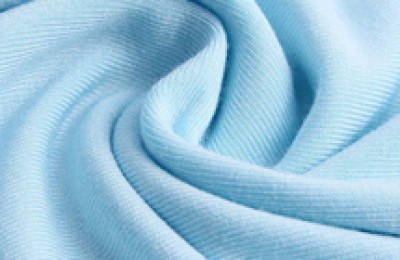

Viscose fiber is very similar to cotton fiber in some properties. It has good hygroscopicity, is easy to dye, and is antistatic. The finished fabric has bright colors and is comfortable to wear, especially in hot climate areas. In terms of hygroscopicity and air permeability, there is no synthetic fiber that can compete with it. Therefore, viscose yarn products have developed rapidly in recent years. Many cotton spinning companies have begun to produce viscose yarns. Now they are interested in the production of viscose yarns. A simple analysis of the quality control points of each process is carried out.
1. Blowing process
Viscose fiber has good length uniformity and almost no impurities, but its strength is low and it is easy to break easily after blowing. Therefore, the beater speed in the blowroom process is appropriately lower than that in the production of pure cotton, polyester and other synthetic fibers, and multiple combs are used to beat lightly. , the principle of less damage to fibers and less or no fall.
When producing pure cotton varieties, since the raw cotton contains a lot of impurities and short lint, and the impurities are difficult to remove, the blowroom production line is generally equipped with more opening points and impurity removal points. , the production process is longer. Relatively speaking, when producing viscose, the process flow should be shortened, 1-2 blowing and opening points should be removed, and the beating speed of each part should be reduced. For example, when using a combined blowing and carding production line, you can skip the axial flow opener, dust removal machine, etc., and replace all porcupine beaters or sawtooth nose beaters with combing needle beaters to achieve combing instead of beating. Taking the green spinning machine blowing and carding unit as an example, the process that can be adopted when producing viscose is: reciprocating cotton picking machine → heavy object separator → multi-bin cotton mixing machine → fine cotton opener → cotton feeding box → carding machine. Process speed configuration: The beater speed of the cotton picking machine should not be higher than 1000r/min; the beater speed of the fine cotton opener is preferably 380-500r/min.
If it is a modified blowroom and carding unit, the blowing process when producing viscose can be: disc cotton picking machine → mixed cotton opening machine (only use a flat beater, skip Little Porcupine)→Multi-silo cotton blender (optional)→Cotton opening machine (carding roller type)→Cotton feeding box→Carding machine. Process speed configuration: The beater speed of the disc cotton picking machine should not be higher than 700r/min; the beater speed of the fine cotton opener is preferably 380-500r/min.
When producing viscose varieties, the temperature in the blowout process is generally controlled at 26-33°C, and the relative humidity is controlled between 55-66%.
2. Carding process
Viscose fiber has good length uniformity, basically no short lint, no impurities, only a very small amount of hard strands or cakes, and poor fiber cohesion. When the carding process is used to produce viscose fiber, there are many obvious differences in process configuration from the production of pure cotton or other chemical fibers. The carding distance is appropriately larger than that of pure cotton varieties, but smaller than that of other chemical fibers, so as to achieve “moderate carding”. , less fiber damage, fewer neps, and lower noil rate” are the basic principles.
2.1 Cotton board carding process
Since viscose fiber is longer than cotton fiber, in order to reduce fiber damage and improve yarn strength, when producing viscose varieties, the cotton feeding board can be raised by 2-4mm based on the height of pure cotton varieties. To increase the length of the carding process (the cotton carding process does not need to be adjusted when converting other chemical fibers into viscose).
2.2 Back belly technology
When changing from pure cotton to viscose, the back The car belly craftsmanship needs to be greatly adjusted, with the principle of minimizing or eliminating car belly flowers and only removing harmful defects.
2.3 Cylinder-to-cylinder speed ratio
When the cylinder speed is constant, the cylinder speed Too high a speed will cause serious fiber damage, and too low a licker-in speed will affect the opening and carding effects. Generally, when spinning cotton, the tin thorn ratio is configured within 2.5:1, and when spinning viscose and other chemical fibers, the ratio is required to be (2.7-3.0):1. Reasonable.
2.4 Distance between the lick-in roller and the cotton feeding plate
The distance between the lick-in roller and the cotton feeding plate It has a greater impact on fiber damage. Generally, when spinning cotton, the gage of the feeding and carding machine is generally 9-12 inches, and the blowing and carding machine is generally 16-20 inches. When changing to spinning viscose, appropriate enlargement and adjustment should be made. The gauge of the viscose roll-feeding carding machine is generally 14-16 inches, and the blowing and carding unit is generally controlled at 18-24 inches.
2.5 cover plate spacing
The composition of viscose fiber and cotton fiber are similar, but they are similar to cotton fiber. Other chemical fibers are very different. When spinning viscose fiber, the carding machine cover distance is generally larger than when spinning cotton, and smaller than when spinning polyester chemical fiber. Generally, the distance between spun viscose fibers is as follows: 11, 10, 10, 10, 11 Yingsi.
2.6 Principles for selecting card clothing
Viscose fiber is a man-made cellulose fiber. It is smooth and has poor cohesion. In terms of combing degree, it cannot be opened as violently as when spinning cotton, nor can it be combed too softly like spinning polyester chemical fiber. Therefore, it is necessary to reasonably select the specifications and models of card clothing.
(1) Generally, the needle height of cylinder card clothing should be 2.0-2.5mm, and the tooth density should be 750-900 teeth/square inch.
(2) Choose 380-450 teeth/square inch for cover plate clothing to improve carding quality.
(3) The smooth cohesion of viscose fiber is poor. Doffer card clothing should choose a card clothing with an arc back angle and a groove on the side of the needle tip to improve the holding and transfer capabilities. , to ensure the stability of the fiber structure in the cotton web and reduce the neps produced during drafting in the post-process.
2.7 Temperature and humidity control
When spinning viscose fiber, the temperature of the carding process is generally controlled at 26-32℃, relative humidity is controlled between 55-60%.
3. Drawing process
When producing viscose varieties, the drawing process principles are: lower speed and larger roller distance.
</p��Draft multiple. When spun viscose fiber, it is recommended that the draft ratio of the back area be selected between 1.18-1.3 times.
5.3 Control of friction circle
At present, many cotton spinning companies have adopted new spinning technology Equipment – pressure rod spacer block or pressure rod upper pin, extended upper pin, etc., to form an additional friction boundary in the drafting area. Viscose fibers have good length uniformity. Excessive control during the drafting process will create more yarn defects and make life difficult. Therefore, it is not recommended to use the above-mentioned new spinning equipment when producing viscose varieties.
5.4 Top roller hardness requirements
In terms of the hardness of the top roller before spinning, generally When spinning cotton, soft cots with an angle of 65° are mostly used. When spinning polyester, hard cots with an angle of 78° or above are used. When producing viscose yarn, it is generally better to use cots with an angle of 65°-70°.
5.5 Traveler
The model of the traveler has a great influence on yarn breakage. The selection of the traveler must consider both the characteristics of the fiber and the thickness of the yarn count. Therefore, when selecting, it is necessary to test the selection of travellers from different manufacturers and different models, and select a traveler with a suitable bow shape, high temperature and wear resistance.
5.6 Three concentric requirements
No matter what kind of fiber is produced, yarn guide hook, spindle, steel The three concentric points of the collar are very important and have a great impact on hairiness and breakage. Relatively speaking, the strength of viscose yarn is low and it is easier to cause breakage. Therefore, the production of viscose varieties requires more three concentric points. high.
5.7 Temperature and humidity control
For spun viscose varieties, the temperature in the spinning workshop is generally controlled at Above 32℃, the relative humidity is controlled between 55-65%.
6. Winding process
When producing viscose yarn, the winding process needs to focus on splicing and forming.
6.1 Control of splicing quality
The surface of viscose yarn is smooth, the joints are not strong, and it is easy to slip off. Special attention should be paid to the appearance of the splicing. The lap should not be too long or too short. After the appearance is qualified, the splicing strength must be tested. The strength at the joint is required to reach 80% or more of the original yarn strength.
6.2 Package Forming
Because the viscose yarn is relatively smooth, random layers and irregular layers are prone to occur in the package. Problems such as unlooping and random yarns; cobweb yarns are easily produced at the large and small ends of the package, which may cause end breakage during unwinding in the subsequent process, affecting production efficiency. Therefore, the package yarn formation must be strictly controlled when producing viscose yarn.
6.3 Temperature and humidity control
The relative humidity in the winding workshop is generally controlled at 65-75% It can not only prevent the increase of hairiness caused by being too dry, but also improve the performance of the subsequent processes because the yarn becomes soft after absorbing moisture.
7. Conclusion
Key words To spin viscose yarn well, it is necessary to optimize and adjust production equipment and technology. In the blowing and carding process, blows should be reduced and combing is used instead of beating. Carding card clothing should be used for moderate carding to reduce the production of neps and short lint. In the roughing process, a larger roller spacing should be used to reduce accidental elongation and friction, and suitable ones should be selected. The twist coefficient of the roving reduces the elongation of the roving; the spun yarn follows the two major and two small process principles, selects a reasonable friction limit, optimizes the traveler model, and achieves three concentricity; winding focuses on the quality of splicing and poor bobbin forming. </p