
In the textile market in early June, although foreign trade orders were still missing, many companies reported: “Customers from Southeast Asia and the United States have begun to come to us for proofing. “Although the presence of proofs does not prove that the market is improving, it at least shows that customers have demand and there is still hope for this market!
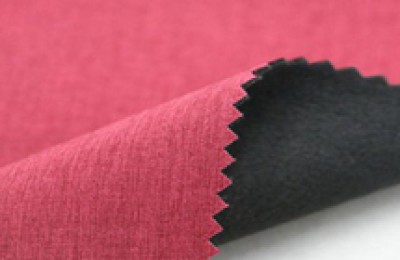
“Recently, we are developing a new type of fabric, which is a relatively high-end protective clothing fabric and is specially supplied to foreign brands.” The above-mentioned person received a sample business member said. Of course, he also said that this customer may have requested samples from many trading companies, and finally selected the most suitable one from these companies’ samples. Therefore, it often happens that samples are sent but nothing comes to mind, which is very common. It’s a normal thing.
It is reported that a small number of traders have received actual foreign trade orders. A foreign trader in Wujiang area revealed: “Recently, customers from Bangladesh have placed several orders with us. Kilometers of gabardine is used to make work clothes. Although the order quantity is not large, it is better than nothing.” Coincidentally, another gray cloth merchant also revealed: “This week, the foreign trade company ordered 200,000 meters of jacquard Chunya to us. It is spun and sent to the United States.”
On the morning of June 2, in the printing workshop of Shaoxing Bailiheng Printing and Dyeing Co., Ltd., a steady stream of printed fabrics with baseball patterns was seen coming from the machine fall.
Bailiheng Dyeing and Printing Workshop. Photo by all-media reporter Xu Yiping
“This is an order for Wal-Mart supermarkets in the United States.” Xia Zhong, chairman of the company, said, “Affected by the epidemic this year, some orders in April Export orders were suspended, but since the beginning of May, orders have gradually picked up, production capacity has returned to more than 90%, and sales have increased by 20% compared with April.”
Shaoxing Bailiheng Printing and Dyeing Co., Ltd. was able to take the lead in recovering in the sluggish market environment, thanks to the strong support of a group of old customers and the company’s excellent product quality. If you don’t accumulate steps, you won’t be able to reach a thousand miles. Xia Zhong believes that only by focusing on quality and service at ordinary times, customers will still choose themselves during the market downturn. As one of the first batch of established printing and dyeing companies to settle in a printing and dyeing cluster, the company also plans to upgrade its factory buildings and equipment this year, and is currently designing a plan.
“Bailiheng Printing and Dyeing”‘s first recovery is not an isolated case.
The reporter learned during the interview that with the gradual advancement of the resumption of work and production in foreign markets, “Bailiheng Printing and Dyeing”, “Baofang Printing and Dyeing” and “Shengxin Printing and Dyeing” Orders from some leading printing and dyeing companies took the lead in picking up in April and May, and orders from Italy, Southeast Asia, Africa and other countries and regions began to “cross the ocean” and enter dyeing factories.
Baofang printing and dyeing production workshop. (File photo) Photo by all-media reporter Xu Ye
In the printing and dyeing cluster area, Zhejiang Baofang Printing and Dyeing Co., Ltd., which is famous in Africa for its batik craftsmanship, also ushered in May. recovery. “Compared with April, the company’s sales in May increased by more than 40% year-on-year.” Li Ruizong, the company’s deputy general manager of production, said that the company’s production capacity has been fully restored and production will be at full capacity in June. When talking about the reasons, Li Ruizhong and Xia Zhong have the same views. He also believes that the rapid recovery of “Baofang Printing and Dyeing” mainly relies on the company’s years of quiet internal practice, the reputation it has established in the African market, and the accumulation of high-quality customers. Dyeing factories are continuing to recover, and upstream companies such as spinning mills and weaving mills should also receive some warmth.
Baofang printing and dyeing production workshop. (File picture) Photo by all-media reporter Xu Ye
On the morning of May 22, in Hainingyu, Zhejiang In the packaging workshop of Li Socks Co., Ltd., workers are packing and sorting dozens of socks of various styles. Many of these new goods that are about to leave the factory are made for foreign customers.
The company’s general manager Zhuang Yinyu told reporters: “We just sent several containers of goods to the UK some time ago, with hundreds of thousands of pairs of socks.”
“There are orders. Compared with May and early June, the orders have gradually increased in the past few days.” A salesperson in Shaoxing, Zhejiang sent several photos of production, which is obviously You can see that the shapes are being finalized in the workshop, and the finished gray fabrics are placed next to them. There are trucks coming in and out, white gray cloth is unloaded from the truck, and there are many gray cloths piled in the warehouse.
The long-dormant international market has shown signs of recovery, giving textile companies a sense of confidence. Generally speaking, Compared with the domestic trade market, foreign trade orders are gradually improving, but not very obviously, but they are indeed recovering slowly.
Can the “street stall economy” “activate” dyeing factories?
The urban management called people to set up stalls, and the “street stall economy” became popular again.
Such changes benefit from the policy dividends released by the central government, which starts with the two sessions. On May 28, after the closing of the third session of the 13th National People’s Congress, when answering reporters’ questions, Premier Li Keqiang praised some cities for taking the lead in loosening the “street stall economy”; on June 1, when Li Keqiang inspected an old community in Yantai, Shandong Said, “The street stall economy and the small shop economy are important sources of jobs and the fireworks of the world. Like ‘Gaoda Shang’, they are the vitality of China.”
Restricted demand due to the epidemic, and Affected by the game of globalization, the exports of the textile and apparel industry will still face relatively high pressure, at least in the short term. To absorb these pressures, one solution is to “convert exports to domestic sales” and absorb part of the export production capacity by expanding the domestic consumer market.
However, short-term expansion of the domestic consumer market is generally difficult to achieve by relying on existing channels. The massive production capacity needs to find new sales channels to digest it more effectively. .
Since the street stall business does not require large investments, it only needs to be “open” to release vitality, and can be rolled out quickly in a short period of time, forming an increase in channels. Its supply chain is based on the mature wholesale distribution market in China. Therefore, the street stall business is very cost-effective in terms of “converting exports to domestic sales” and digesting export production capacity.
The editor said
In fact, in the editor’s opinion, the liberalization policy of the street stall economy, Not only can it solve the problem of mass employment and making money, but it can also establish channels in the short term without destroying the original domestic and foreign sales system, clear the company’s foreign trade inventory, ease the financial pressure on the company, and allow domestic companies to operate normally and survive! Especially in the textile and garment industry, the pressure in this area is huge. Batch after batch of socks and each piece of clothing will drive many textile printing and dyeing factories behind them. They can “continue life” during the epidemic and successfully survive the crisis brought about by this epidemic.
</p