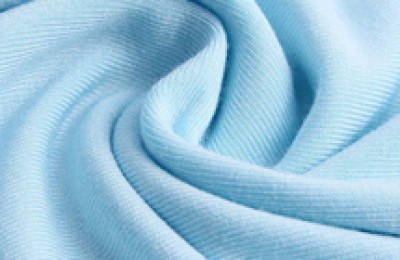

As the quality level of cotton yarn and customer demand continue to improve, in order to improve the texture clarity of knitted fabrics and improve the quality of yarn, the company has increased its investment in special parts and selected high-precision bearings, steel rings and imported wire rings. But hairiness still cannot meet customer requirements. In the subsequent research, Nanyang Haiyong Textile and Garment Enterprise Co., Ltd. began to try to use the spun yarn front area collector to improve the hairiness index, and achieved good results, achieving the purpose of improving yarn quality.
The function of the collector is to shrink the yarn The width of the strips reduces the twisting triangle area, so that the yarn strips are twisted in a relatively tight state, resulting in a tight yarn structure, a smooth appearance, less hairiness and increased strength; at the same time, it can also prevent edge fibers from being lost and reduce flying flowers. Reduce velvet roller spend and save cotton.
There are currently two types of domestic collectors, double-bar collectors and frame collectors. Two concentrators produced by a certain company were selected for comparative testing under the same spindle and roving conditions. The results showed that the double-rib concentrator has a good effect on improving the quality of the yarn. In the bellows white flower test, 8 hours per shift, 420 spindles without a collector was 0.5639, using a double rib collector was 0.4179, and using a frame collector was 0.4529. If a total of 30,000 spindles are used per year, 11.51 tons of cotton can be saved compared to not installing a collector. The benefits are very considerable.
Based on the test data, we started trial spinning on two spinning machines. After a period of time, the effect is more ideal. However, after large-scale use, many problems such as collector jumping, blackening of the rubber roller surface, collector damage, improper installation, and sudden increase in yarn defects have occurred.
As for the beating phenomenon of collectors, we investigate from the source. Each newly purchased collector must be picked and inspected, including the deformation of the steel wire frame and the cleaning of burrs at the opening. . Because our factory all uses pneumatic cradle, the collector is suspended and installed on the upper pin spring of the cradle. This itself makes the collector less stable, runs unbalanced during use, and causes jumping due to friction with the rubber roller. In response to this situation, we first performed light treatment on the surface of the rubber roller to reduce the surface roughness and reduce the friction between the rubber roller surface and the collector; at the same time, we moved the upper pin spring on the cradle so that is in a suitable location. After the collector is installed and the cradle is pressed down, the upper pin, collector and top roller are stable, which avoids the collision between the upper apron and the collector, as well as the collector jump caused by the instability of the wire frame.
After installing the collector, it was found that the distance between the floating areas was too small, which directly caused the collector to be close to the top roller during operation. The movement gap of the collector was too small, causing the collector to The friction with the rubber roller is large, causing the surface of many rubber rollers to become black, hot, damaged and grooved, and a lot of lint accumulates at the opening of the collector. In response to this problem, combined with the actual situation, the middle iron roller was moved from the original 46 mm scale to 47 mm, and the front rubber roller was changed from a front punch of 3 mm to a front punch of 4 mm. After such adjustment to increase the distance between the floating areas, the top roller The amount of blackening and wear has been greatly reduced, which has played a very good role.
In addition to reducing the friction between the rubber roller and the collector, the traverse movement of the collector should also be flexible. Because the collector is suspended from the upper pin spring and relies entirely on the traverse movement of the yarn strips to drive left and right movement, this requires that the traverse device of the spinning machine must be flexible and guaranteed to be between 7 and 9 mm. In addition, the wiping cycle of the spinning machine is about 15 to 20 days. The surface of the rubber roller becomes sticky due to the accumulation of cotton wax. The rubber roller is easy to become astringent after being cleaned and put back on the machine. Therefore, it can be treated with talcum powder appropriately to make it sticky. The surface of the rubber roller remains dry, clean and reduces friction. </p